Book Project
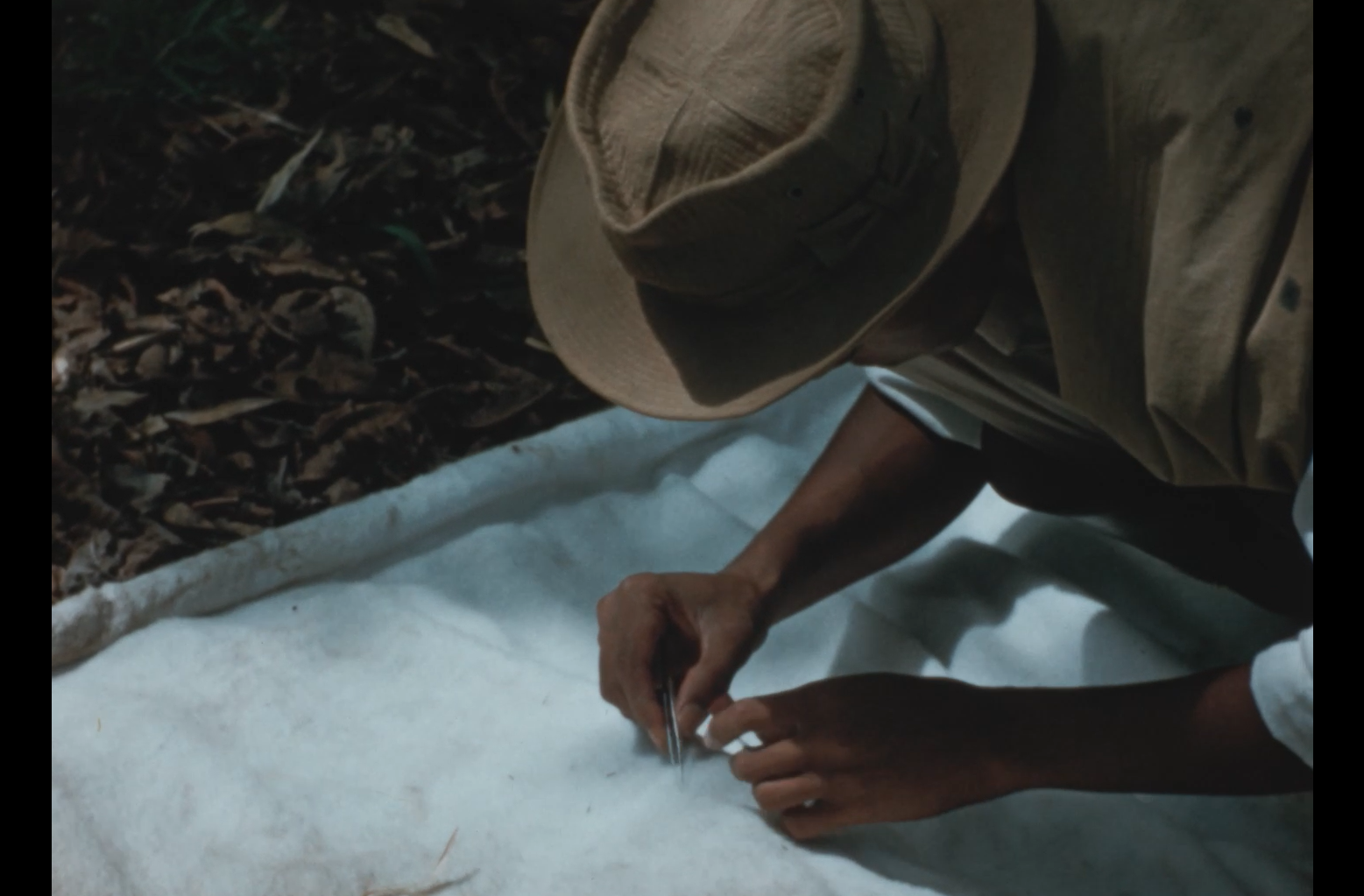
Still from Kyasanur Forest Disease (dir. Telford Work, 1956)
My current monograph, tentatively entitled Contagious Racialization: Asian Americans, Epidemiology, and the Culture of Disease, explores why Asian Americans are hypervisible in the discourses of certain diseases, while being almost completely absent from the discourse of others. Despite the durability of the racial trope of the “contagious Asian” across the 20th and 21st century, Asian Americans do not uniformly stand in for the many diseases that intersect with modern life. I ask how an accounting of Asian American racial form that takes contagion as one of its foundational pillars might address questions of racial embodiment and community relationality for Asian Americans from the Cold War through the present day. Rather than reading an association with contagion as only symptomatic of racism and xenophobia, I examine how a sense of one’s race as contagious has been incorporated into Asian American cultural life through literature, film, and scientific media.
Peer Reviewed Articles
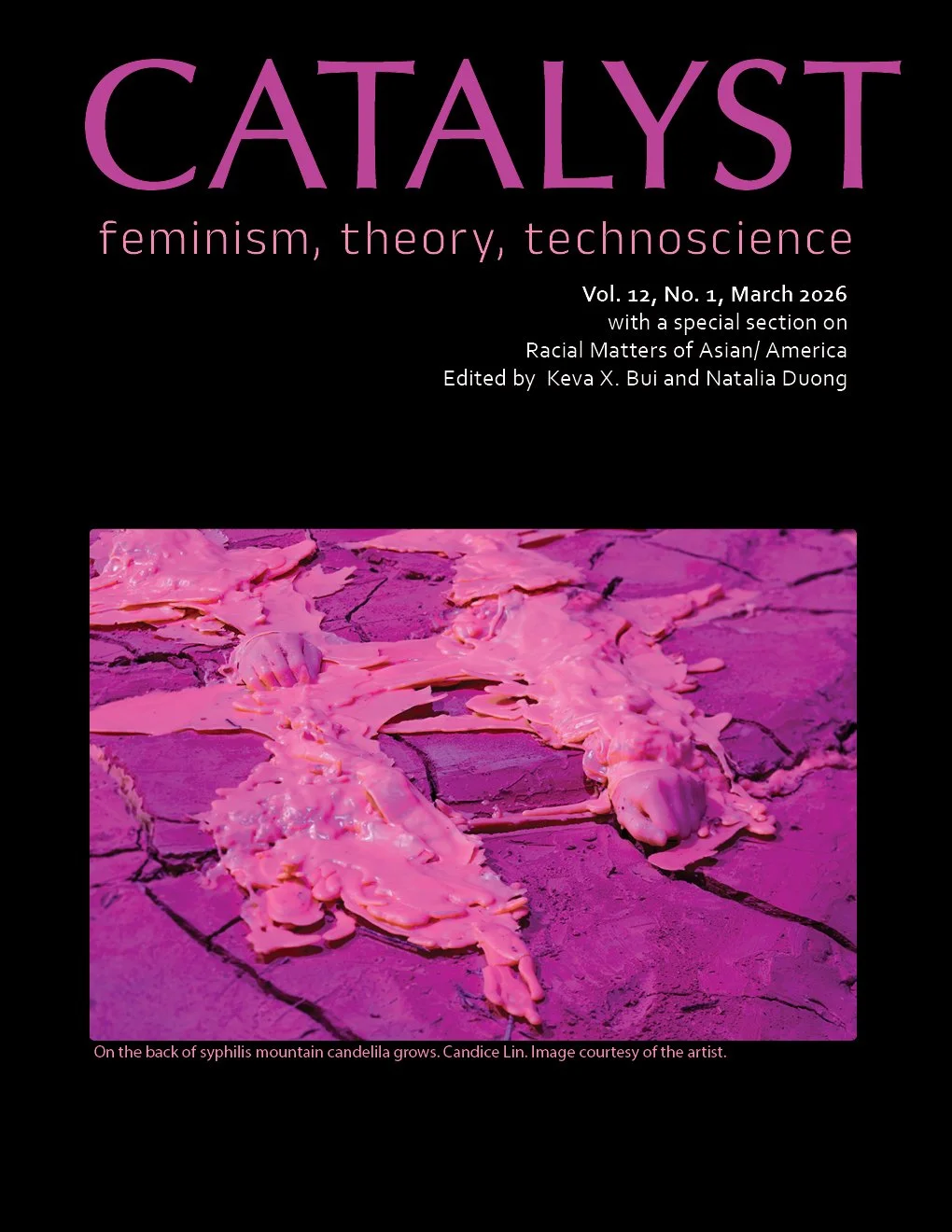
“After Hybridity: The Biological Life of the Mixed Race Child.” Catalyst: Feminism, Theory, Technoscience, vol. 12, no. 1, March 2026. doi.org/10.28968/cftt.v12i1.44965
This article tracks the biological life of the mixed race Asian American child: an uncomfortable attachment to a biological notion of race that manifests for the multiracial subject at odds with models of race as a social construction. I argue that renderings of the mixed race child as a metaphor for assimilation and multicultural progress obscure how racial science continues to shape the very definition of mixed raceness. Instead, I frame the mixed race Asian American child as hybrid matter to explore the slippages between their figuration and other abnormally reproduced objects: the genetically modified food organism and cancer. In framing the mixed race child as biologically reproduced, I account for the mixed race child’s fraught relationship to the family structure, and the negative feelings that accompany the future the mixed race Asian American child is asked to hold.
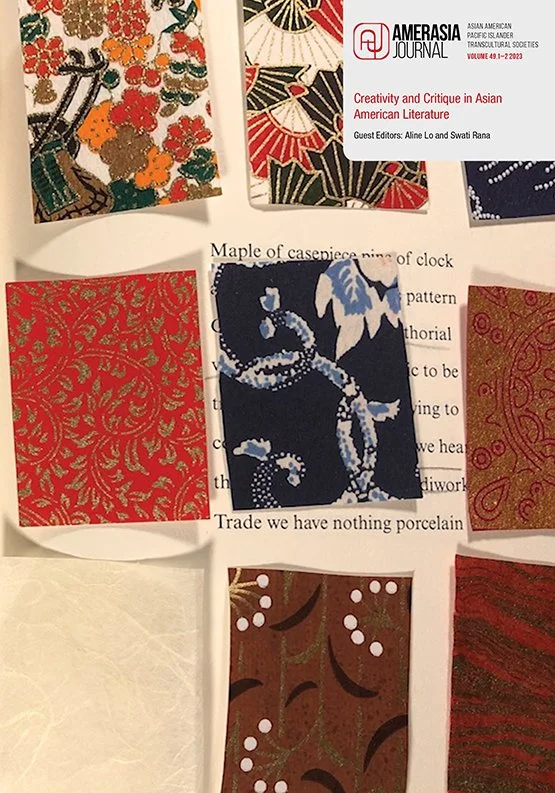
“Sensuous Machines: Sexuality, Violence, and Robots in Asian American Speculative Poetry.” Amerasia Journal, vol. 49, no. 1–2, May 2023, pp. 43–54. doi.org/10.1080/00447471.2023.2298258
In this article, I explore how two collections of Asian American speculative poetry—Franny Choi’s Soft Science and Margaret Rhee’s Love, Robot—prioritize sensation to challenge the cultural construction of the Asian female robot. As liberal humanism’s promise of rights through visual representation and narration fail to manifest, speculative poetry offers an alternative sensory apparatus through which racialized and gendered subjectivity might be recognized. Playing with poetic opacity, inscrutability, and ambiguity, Choi and Rhee highlight the sensory power of sexuality to defy categorical definition. Contextualized in the history and present of sexual violence for Asian American women, their experiments in robot sensation offer new models for being-with attentive to the politics of racialized, gendered, and human embodiment.